

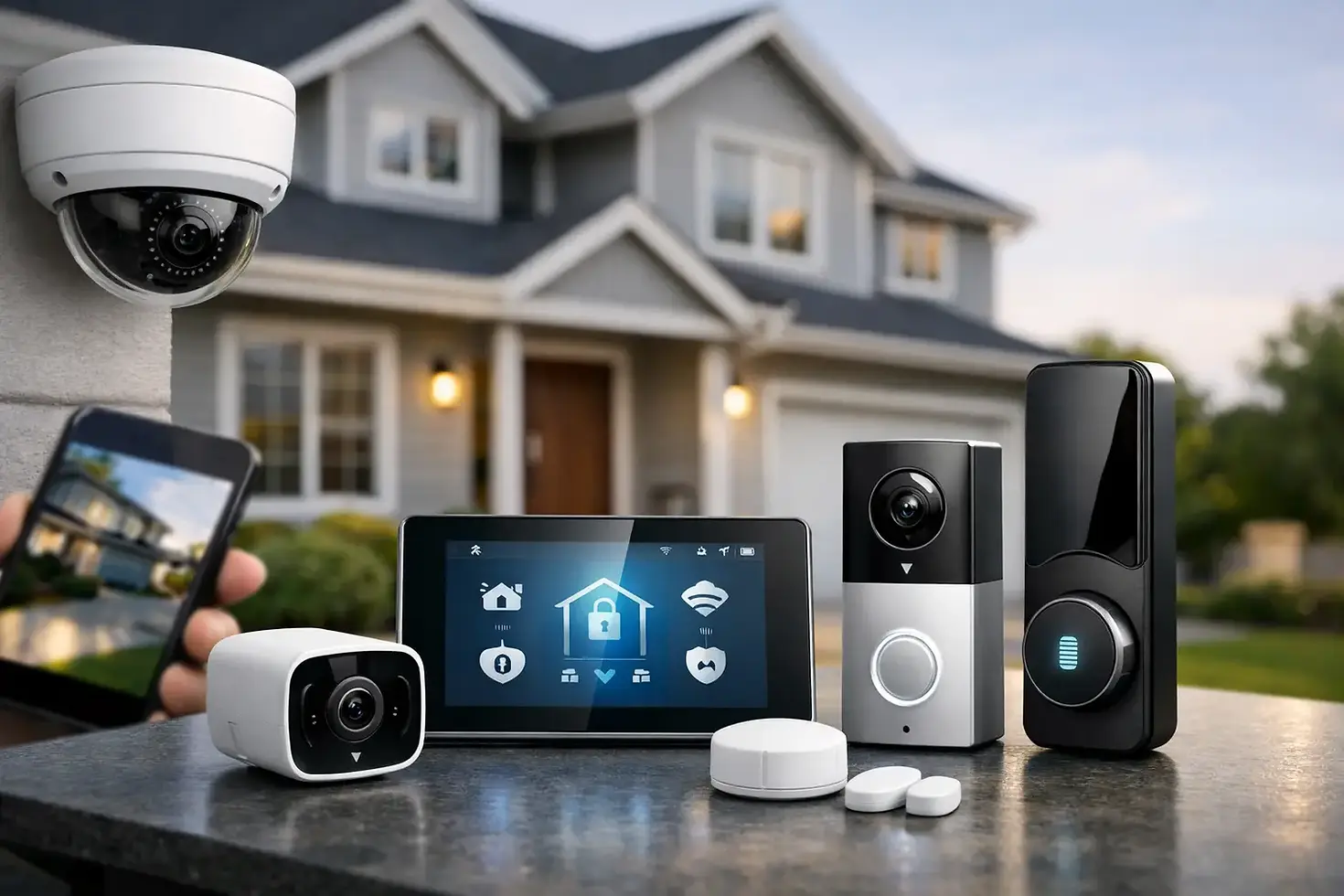
Home Security Trends 2026: What Matters
- James Greathead

- 2 days ago
- 6 min read
A lot of security problems still start with the same weak points - a tired euro cylinder, a misaligned UPVC door, a side gate latch that never quite catches, or a property left empty longer than planned. The difference with home security trends 2026 is that more people are looking beyond alarms alone and paying closer attention to the basics that actually stop an entry attempt.
That is a sensible shift. Smart devices have their place, but most break-ins still come down to physical access. If a lock can be snapped, a mechanism is failing, or a door is not closing square into the frame, the latest app will not make up for it. The strongest security setups in 2026 are not the flashiest. They are the ones that combine dependable hardware, practical monitoring and fewer weak spots.
Home security trends 2026 are getting more practical
For a few years, the conversation around home security leaned heavily towards gadgets. Video doorbells, app alerts and connected sensors grabbed the attention. Those products are still popular, but the market is maturing. Homeowners, landlords and site managers are asking a better question now: what will actually hold up at two in the morning when something goes wrong?
That change matters. Security is moving away from novelty and towards reliability. People want systems that work during a power cut, locks that meet insurance expectations, and doors and windows that shut properly every single time. They also want fewer false alarms, fewer missed faults and fewer situations where one failed component leaves the whole property exposed.
This is especially true for rental stock, HMOs, small commercial premises and void properties. In those settings, hard-wearing hardware and quick fault response often matter more than extra features.
Smarter locks, but not smart for the sake of it
Connected locks will keep growing in 2026, particularly where access needs to be managed for multiple people. Landlords, holiday lets, managed properties and small offices can all benefit from controlled entry without constant key handovers. But there is a clear trade-off. Convenience only helps if the lock itself is secure and the door is properly set up.
A smart lock fitted onto a weak cylinder or a worn mechanism is not a security upgrade. It is just a different way of operating a vulnerable door. That is why better installations are focusing on the full door set: cylinder, handle, keeps, hinges, alignment and the internal gearbox or locking strip where relevant.
For many properties, a high-quality anti-snap cylinder on a correctly adjusted door remains the better option than a smart lock with extra failure points. It depends on how the building is used, who needs access and how much day-to-day management is involved.
Mechanical strength is back at the centre
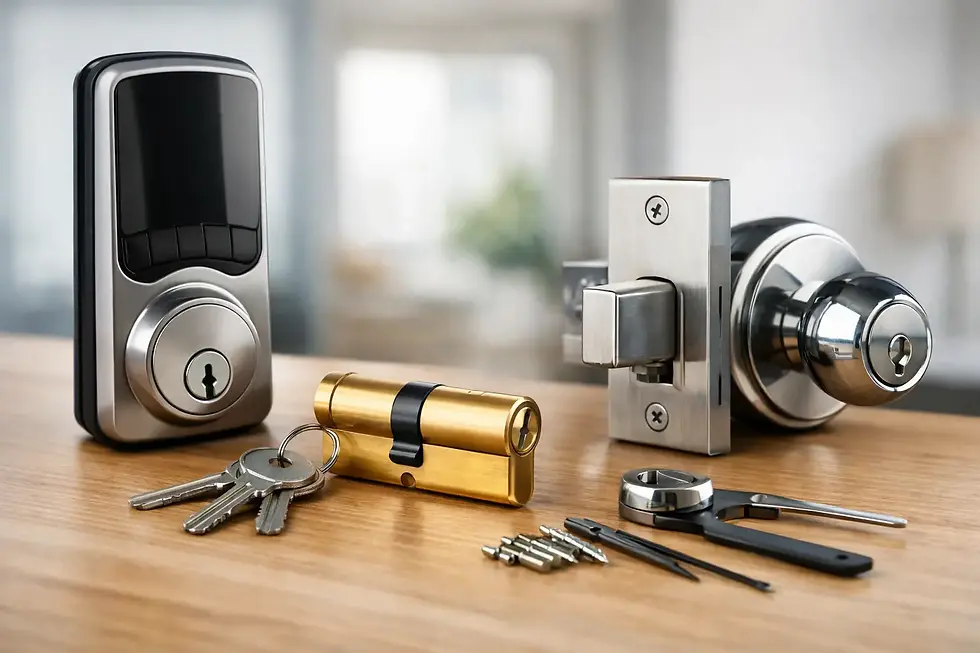
One of the clearest home security trends 2026 is renewed interest in physical resistance. Anti-snap, anti-pick and British Standard compliant locks are no longer treated as specialist upgrades. More customers understand that these are sensible baseline protections, especially on front and rear entrance doors.
That includes UPVC and composite doors, where the lock cylinder gets most of the attention but the wider mechanism often causes the real trouble. If the door drops, the hooks drag, or the gearbox starts to fail, users force the handle, wear increases and security drops with it. Routine adjustment and timely repair are becoming part of proper home security, not just maintenance.
Video is staying, but better placement matters more than more cameras
Cameras are now normal rather than novel. What is changing in 2026 is how they are being used. Instead of adding cameras everywhere, property owners are thinking more carefully about sight lines, lighting and what actually needs to be captured.
A badly placed camera above a porch can miss a face. A rear camera with poor night performance may record movement without giving useful detail. And if the side access, gate or ground-floor window is the realistic entry route, the front door camera may do very little beyond showing what happened afterwards.
Practical setups tend to work best. Cover the main approach, any vulnerable side or rear access, and the area around sheds or outbuildings if they create a route into the main property. Good lighting makes as much difference as the camera itself. Without it, footage often becomes less useful the moment you need it most.
Empty properties need a different security plan
One area getting more attention in 2026 is temporary vacancy. That includes homes during probate, properties between tenants, houses under renovation and commercial units waiting for works. These sites often sit in a grey area where people assume standard security is enough, until there is a break-in, squatting, vandalism or water damage discovered too late.
A vacant property usually needs more than locked doors. It may need boarding up after damage, lock changes, restricted access for contractors, regular checks and a clear record of who has attended. In some cases, visible deterrents help. In others, discretion is better.
The right approach depends on how long the property will be empty and whether trades, agents or family members still need access. What matters is removing uncertainty. The more people involved, the more important controlled access becomes.
Fewer devices, better integration
Another shift is that people are getting tired of managing five separate apps and a stack of notifications. Security in 2026 is leaning towards simpler systems that work together without becoming a nuisance.
That does not always mean expensive full-building automation. Often it means choosing a sensible combination - for example, a reliable intruder alarm, well-positioned cameras, exterior lighting and proper physical door security. If one part fails, the rest should still do their job.
This is where many cheaper setups fall short. They promise convenience, but when batteries die, Wi-Fi drops or settings are changed accidentally, the user loses confidence and stops paying attention. The best system is the one people will actually keep maintained.
Insurance and compliance are carrying more weight
Insurers are paying closer attention to standards, and property owners are more aware of it. In 2026, there is stronger demand for approved lock types, documented upgrades and security work that would stand up if a claim ever had to be made.
That is not just relevant to larger sites. A homeowner replacing a failed lock should still think about whether the new part meets current expectations. Landlords and housing providers need to be even more careful, because a lock that is cheap today can become expensive if it leads to a failed inspection, a tenant complaint or a disputed claim.
It is also why quick fixes can be a false economy. The cheapest part is not always the right part, especially on external doors used many times a day.
Home security trends 2026 for doors and windows
Doors and windows are still where the most meaningful improvements happen. In many properties, the biggest gain comes from fixing what is already there rather than adding something new.
If a window does not lock properly, a handle is loose, a keep is worn or a door needs lifting to engage, those faults are worth dealing with quickly. Small issues tend to become larger ones. They also train occupants into bad habits, such as leaving a window on the latch or not fully throwing the lock because it feels stiff.
This is particularly common with older UPVC doors and windows. The frame may still be sound, but the moving parts wear over time. Replacing the right component early is usually cheaper and more secure than waiting for a complete failure.
Security is becoming more routine, not reactive
Perhaps the most useful trend of all is a change in mindset. People are starting to treat security checks the same way they treat boiler servicing or roof repairs - something to stay ahead of, not just respond to after a problem.
That is a good move for homeowners and an even better one for landlords and site managers. A periodic check of locks, door alignment, window operation, outside lighting and access control can spot issues before they become emergency call-outs. It also reduces the chance of repeat visits and rushed decisions when a property is already vulnerable.
For customers across Gloucestershire, that practical approach usually gives the best results. Strong locks, sound doors, sensible monitoring and fast repairs when something starts to fail will outperform a pile of gadgets every time.
The best security upgrade in 2026 may not be the newest one. It may simply be fixing the weak point you already know about before somebody else notices it too.


Comments