

Anti Snap Lock Review: What Matters
- James Greathead

- 1 hour ago
- 6 min read
A burglary often takes less time than people expect, and on many older euro cylinder doors the weak point is not the handle or the frame - it is the cylinder itself. That is why an anti snap lock review needs to go beyond marketing claims. If you are replacing a front door lock, dealing with a rental property, or trying to meet insurer expectations, the real question is simple: does the cylinder resist the attack methods actually used on homes and small business premises?
Anti snap lock review: the short answer
A good anti-snap cylinder is absolutely worth fitting on any door that uses a euro profile cylinder, especially UPVC and composite doors. The better models are designed to fail in a controlled way if attacked, protecting the cam and stopping the intruder from operating the lock. Cheap versions may still say they are anti-snap, but the quality of the sacrificial section, the internal pins, the anti-drill features and the overall machining can vary a great deal.
In practice, the best anti-snap locks are not just harder to break. They are more consistent to use day to day, less prone to early wear, and more likely to meet recognised standards. That matters when the lock is on the main entrance to a house, flat, office, school site or managed property.
What an anti-snap lock is actually meant to do
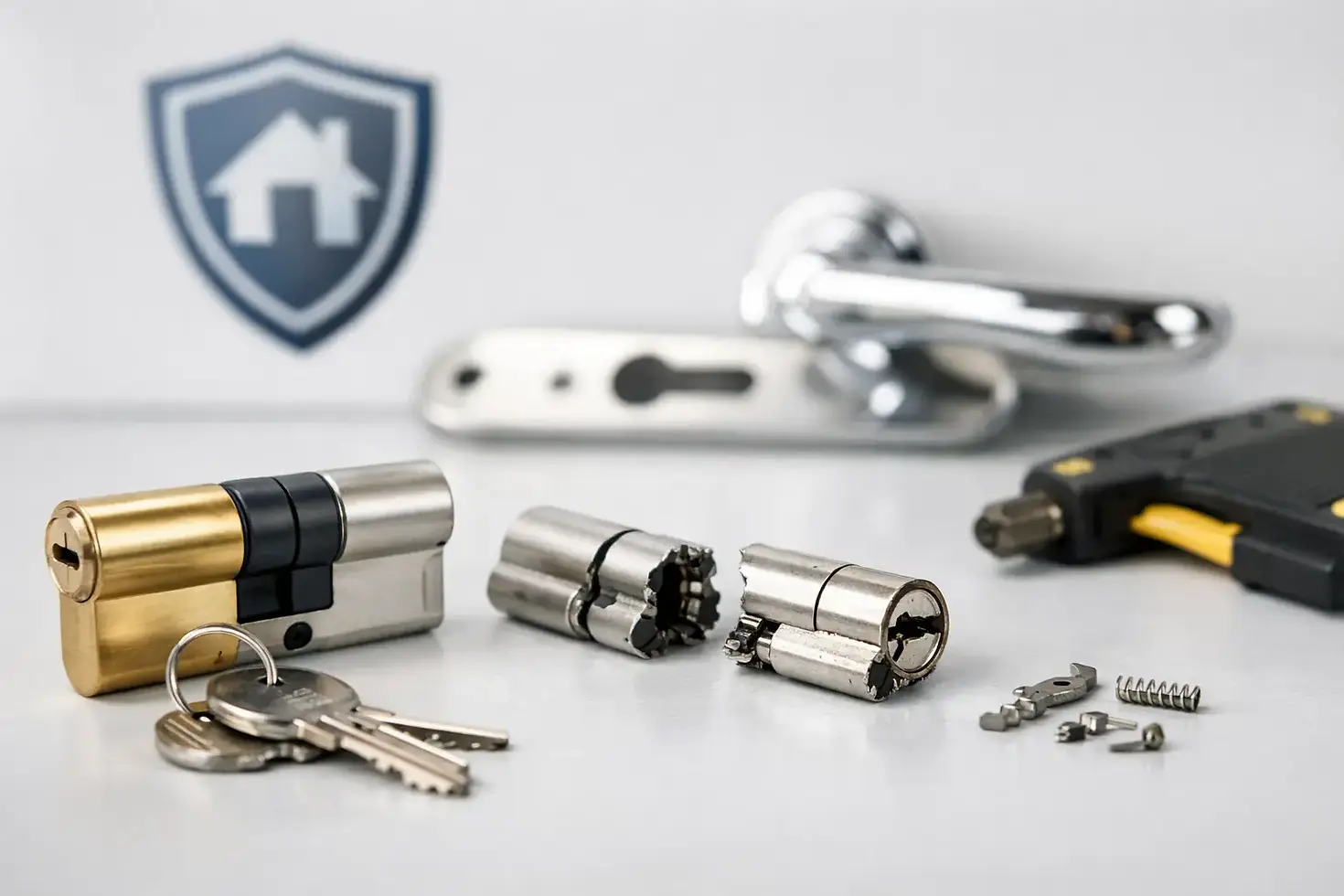
Lock snapping is a forced entry method aimed at euro cylinders that protrude too far or have vulnerable break points. The attacker applies force to the cylinder, breaks it at its weakest section, then targets the internal mechanism to open the door.
An anti-snap cylinder is designed so that if somebody attacks that exposed area, the outer section breaks away first while the protected internal part remains secure. On a proper cylinder, that controlled break should stop access to the cam and make the attack far less effective.
That is the theory. The difference between a decent cylinder and a poor one is how reliably it does this under real force, not just in a product photo.
What to look for in an anti snap lock review
The first thing to check is whether the lock has been tested to a recognised standard. In the UK, many customers will come across TS007 ratings and British Standard references. A 3-star cylinder is widely regarded as a strong standalone option. A 1-star cylinder can still form part of a secure setup, but usually needs to be paired with suitable security furniture to reach the same overall level.
After that, build quality matters just as much as the label. The best cylinders usually have a solid feel, accurate machining and a smooth but positive action. If the key turns roughly from the start, or the lock feels loose in the door, that is not a good sign.
You should also look at anti-drill and anti-pick features. Snapping gets most of the attention because it is fast and noisy, but a cylinder should offer layered protection. Security is stronger when the lock resists more than one method of attack.
There is also the question of fit. Even a very good cylinder can be made vulnerable if it is the wrong length and sticks out too far from the handle. A lock review that ignores sizing is missing a big part of the job.
Standards matter, but installation still decides a lot
This is where many online reviews fall short. They compare badges, stars and packaging, but they do not mention the door itself. On a UPVC or composite door, alignment, handle condition, gearbox performance and the cylinder's projection all affect how secure the finished setup will be.
If the door is dropping, the mechanism is stiff, or the handle is worn, the lock may not seat or operate as it should. In those cases, simply changing the cylinder is only part of the fix.
Price versus value
A budget anti-snap cylinder is usually better than an old non-protected one, but there is a point where saving money stops making sense. The difference in cost between a basic cylinder and a well-tested, properly fitted anti-snap upgrade is often modest compared with the cost of a break-in, damage to the door, or the disruption that follows.
For landlords and managing agents, that calculation is even clearer. A stronger cylinder can reduce avoidable call-outs, improve tenant confidence and help bring the property closer to insurer expectations.
Where cheaper anti-snap cylinders fall short
Not every lock sold as anti-snap is equal. Some rely heavily on the term without offering the level of resistance most customers assume they are getting. A weak sacrificial section can fail too easily. Poor internal tolerances can lead to sticking, especially on doors already under strain. Lower-grade metals may also wear faster.
That does not always show up on day one. It often appears months later, when the key starts dragging, the lock becomes temperamental in cold weather, or the cylinder develops play. A lock that frustrates the user every day tends to get forced, ignored, or left until it fails completely.
For occupied homes and managed premises, reliability is part of security. If a lock is awkward enough that people stop double locking the door, the specification on the box becomes less impressive.
The best anti-snap lock is the one that suits the door
This is the part many people do not hear until a locksmith attends. There is no single best anti-snap cylinder for every property. The right choice depends on the type of door, how the cylinder sits within the handle, the traffic through that entrance, who needs access, and whether you are securing a home, rental, office or shared building.
For example, a family home may prioritise smooth daily use and a high standard cylinder on the main entrance. A rental property may need a balance between security, durability and controlled key management. A side entrance on older hardware may also need the handle and alignment sorted at the same time to get the benefit from any upgraded cylinder.
This is why hands-on assessment matters. A stocked locksmith can usually tell very quickly whether the existing setup is vulnerable because of the cylinder alone or because the wider door hardware is also contributing to the risk.
Anti snap lock review for UPVC doors
UPVC doors are one of the most common places where anti-snap cylinders make a real difference. Many of these doors were fitted years ago with standard euro cylinders that are now well behind current expectations. The door itself may still be perfectly serviceable, but the cylinder is the weak point.
On these jobs, the review is rarely just about the barrel. If the door needs adjustment, the keeps are tight, or the gearbox is beginning to wear, those issues should be dealt with as part of the security work. A new anti-snap cylinder on a badly aligned door may still leave you with stiffness, poor locking and avoidable strain on the mechanism.
For households and landlords, this is often where using a local specialist pays off. Someone who works on UPVC doors every day is more likely to spot the secondary faults before they become another call-out.
When an upgrade is worth doing now
If your cylinder protrudes from the handle, has no visible security rating, came with the property years ago, or feels rough in use, there is a strong case for upgrading. The same applies after a tenant change, following lost keys, or if you have recently reviewed your home insurance and realised the wording expects a higher standard of door security.
It is also worth acting before the lock fails rather than after. Emergency lock problems are stressful enough without adding a known weak cylinder into the mix. Replacing it on a planned visit is usually more straightforward and gives you time to choose the right specification.
Our verdict on anti-snap locks
As an anti snap lock review, the verdict is clear: a quality anti-snap cylinder is one of the most sensible security upgrades for a euro cylinder door, but only if you choose a proven product and fit it properly. The badge matters, the standard matters, and the engineering matters - but the final result still depends on correct sizing and the condition of the door hardware around it.
If you are comparing options, be wary of anything that looks cheap for the sake of it, or any review that treats all anti-snap locks as interchangeable. They are not. Some are built to pass a test. Some are built to cope with real use as well.
For most homes, rentals and small business premises, the right anti-snap upgrade is not about buying the most expensive cylinder on the shelf. It is about fitting a lock that matches the door, meets current expectations and works cleanly every single day. If you are unsure, get the door looked at properly and make the decision before it becomes an emergency.


Comments