


Why Does My Door Lock Stick? Common Causes

You notice it when you are trying to leave in a hurry. The key goes in, but the lock feels tight, rough or hesitant. If you have been asking, why does my door lock stick, the short answer is that something is out of alignment, worn down, dirty, damaged or under strain. The longer answer matters, because a sticky lock is often an early warning sign that the problem is about to get worse.
A lock rarely becomes difficult for no reason. In many cases, the fault starts small. The door may have dropped slightly, the internal mechanism may be wearing, or the key may no longer be turning the components cleanly. Leave it too long and a stiff lock can turn into a snapped key, a failed gearbox, a door that will not secure properly, or a complete lockout.
Why does my door lock stick on some days but not others?
This is one of the most common patterns people notice. The lock feels fine for a while, then starts sticking in the morning, during damp weather, or only when you pull the handle a certain way. That usually points to movement in the door, frame or mechanism rather than one simple fault inside the cylinder alone.
Changes in temperature and moisture can affect how a door sits in its frame. Timber doors can swell, and even modern multi-point door systems can shift enough to put pressure on the lock. If the bolts, hooks or latch are not lining up cleanly with the keeps, the key has to work harder than it should. You feel that extra resistance at the key, but the real issue may be the door position.
This is especially common with uPVC and composite doors. A door can look perfectly normal, yet still be slightly misaligned. Sometimes the handle feels loose or heavy at the same time. Sometimes you have to lift the handle harder than before. Those are useful clues that the locking strip or gearbox is under strain.
The most common causes of a sticking door lock
A sticky lock is usually caused by one of a handful of faults. The trick is working out which one you are dealing with before a small repair becomes a bigger one.
Misalignment between the door and frame
If the lock works better with the door open than with the door shut, misalignment is the first thing to suspect. The mechanism may be sound, but the door is not meeting the frame correctly. That forces the moving parts to bind.
You might notice that the key turns smoothly when the door is open, then turns badly when closed. Or the handle may need extra force before the key will move. This often means the latch, rollers, hooks or deadbolt are catching where they should not.
Dirt, debris or lack of proper lubrication
Locks collect dust, grime and moisture over time. Outdoor doors are exposed to the worst of it. If dirt gets into the cylinder or mechanism, movement becomes rough and inconsistent.
That said, lubrication is not always a simple fix. Using the wrong product can make matters worse by attracting more dirt or gumming up the internal pins. A lock that has been sprayed repeatedly with general household oil often ends up stickier, not smoother.
A worn or damaged key
Sometimes the problem is not the lock at all. A key that has worn down over years of use may no longer lift the pins accurately. It still goes in, but you have to jiggle it, pull it back slightly or turn it more carefully than before.
If one key works badly but a spare works better, that is worth paying attention to. A damaged key can also cause internal wear if used for too long.
Internal wear in the lock cylinder or mechanism
Locks are mechanical parts. They wear. Pins, springs, cams and internal components gradually lose tolerance, especially on busy household doors, rented properties and commercial entrances.
On multi-point systems, the issue may not be the cylinder itself but the central gearbox or strip mechanism. If the lock is stiff, the handle drops, the key turns only partly, or the door sometimes locks and sometimes does not, internal wear is a strong possibility.
Door movement and hinge problems
Doors can drop over time. Hinges loosen, fixings shift, and regular use takes its toll. Even a few millimetres of movement can affect how cleanly the lock engages.
This is why forcing a sticky lock is a bad idea. If the door has moved, extra force does not solve the cause. It only transfers stress into the key and lock body.
What you can safely check yourself
Before you call for help, there are a few sensible checks you can make. Keep them basic. The aim is to avoid making the fault worse.
First, test the lock with the door open. If the key turns smoothly when the door is open but sticks when the door is shut, the issue is likely alignment rather than a failed cylinder.
Next, try a spare key if you have one. If the spare works better, your usual key may be worn. If both keys behave the same way, the problem is more likely in the lock or door.
Look at how the door sits in the frame. Are the gaps uneven? Does the door catch, rub or need lifting? Does the handle feel stiff when raised? Those signs point towards adjustment or mechanism strain.
You can also inspect the keyway for obvious dirt, but avoid poking tools inside. If you choose to use a lock lubricant, use a product intended for locks and apply it sparingly. If there is no clear improvement, stop there.
What not to do when a lock sticks
The biggest mistake is forcing it. A sticking lock is often close to failure. Twist harder and you risk snapping the key or breaking an already worn mechanism.
It is also unwise to keep spraying random lubricants into the cylinder. Greasy products can trap dirt and create a thicker residue inside the lock. Another common mistake is trying to adjust hinges or keeps without knowing where the pressure point is. Small changes in the wrong place can make the door harder to secure.
If the lock is on an external door, do not ignore it just because it still works eventually. A lock that only secures after a struggle is not reliable. That is a security issue as much as a convenience problem.
When a sticking lock means you need a locksmith
If the key is hard to turn, the handle is stiff, the lock works only intermittently, or you need to jiggle the door each time, it is time to get it looked at properly. The same applies if the key will not come out cleanly, the door will not fully lock, or the mechanism feels different from one day to the next.
A proper diagnosis matters because the visible symptom can be misleading. What feels like a faulty barrel may actually be a misaligned door. What looks like a simple stiff lock may be a failing gearbox. Replacing the wrong part wastes money and does not remove the strain that caused the problem in the first place.
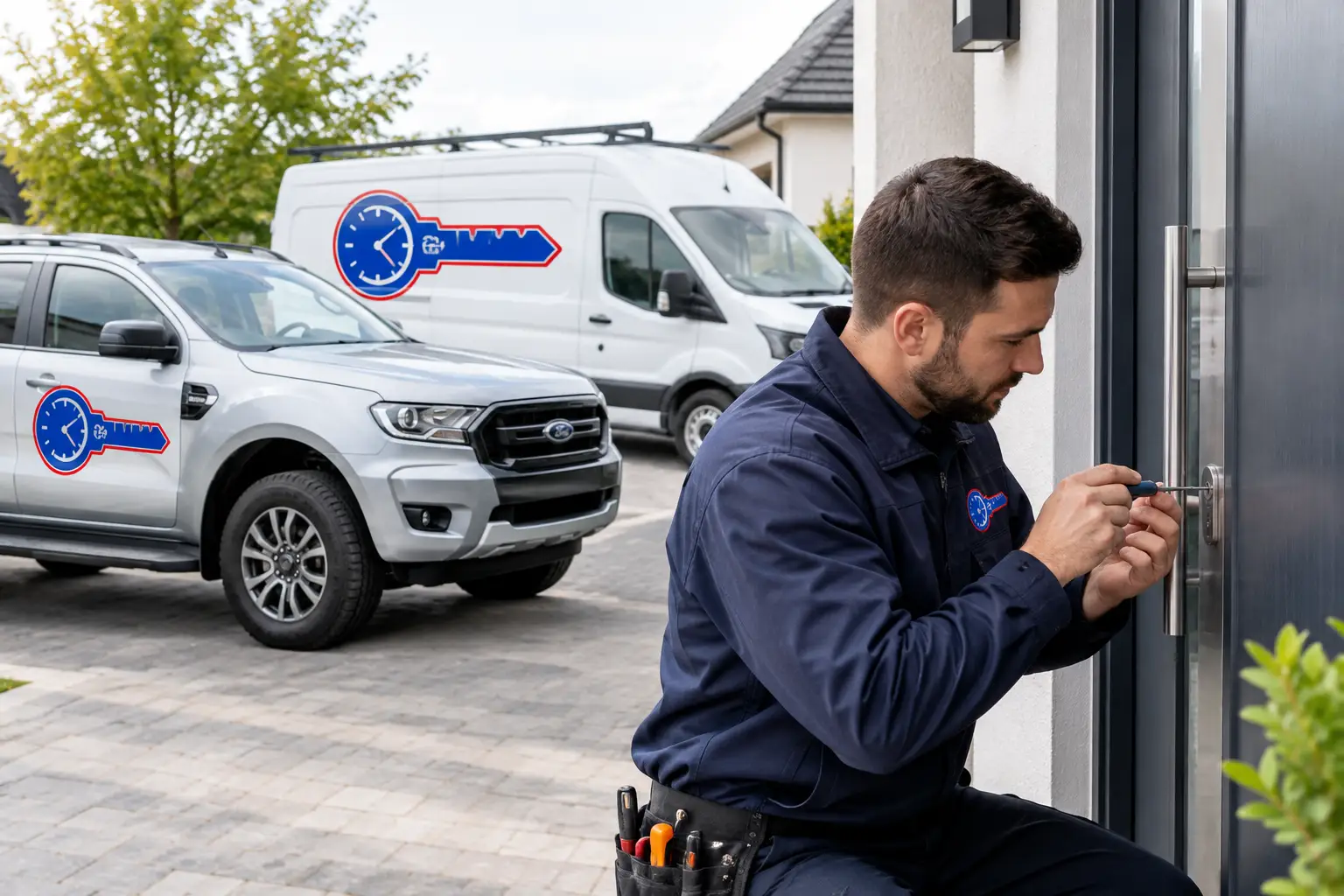
For uPVC and composite doors especially, the repair often needs more than a quick part swap. The door may need adjustment, the keeps may need checking, and the mechanism may need to be matched correctly. This is where specialist experience helps. A stocked van and the right parts on hand can often mean a first-visit repair rather than a temporary patch.
Why does my door lock stick after I lock it?
If the lock seems worse after locking or unlocking, the issue may be in the cam, gearbox or multi-point action rather than the key entry itself. You may be able to insert the key normally, but feel resistance at the point where the mechanism engages. That often means the internal parts are struggling under load.
In plain terms, the lock is not just sticking at the surface. The system behind it is working too hard. That can happen because of wear, poor alignment, or both together. The danger is that it may keep working just enough to seem manageable right up until it fails completely.
Preventing the problem from coming back
The best prevention is early attention. If a lock starts feeling stiff, do not wait for a full failure. Minor door adjustments, timely part replacement and using the correct approved hardware can save a more expensive emergency call-out later.
It also helps to be realistic about age and use. A heavily used front door in a family home, rental property or shared building will wear faster than a lightly used internal door. If the mechanism has already been struggling for some time, a full repair is usually better value than repeated short-term fixes.
Where replacement is needed, using British Standard or anti-snap approved parts is often the sensible route, especially on doors tied to insurance requirements. A cheap part that fails early is no bargain.
At Locksmiths Gloucester, we see this pattern every week: a lock that was stiff for a month, then failed at the worst possible time. If your door is already warning you, it is usually better to deal with it while it is still a repair rather than an emergency.


Comments