


UPVC Door Lock Repair: What Usually Goes Wrong

A uPVC door rarely fails without warning. Most start with small signs - the handle feels loose, the key gets stiff, the door needs lifting to lock, or the mechanism only works if you push hard against the frame. When people search for uPVC door lock repair, they are usually dealing with one of those problems and hoping it can be fixed without replacing the whole door.
That is often possible. In many cases, the issue is not the full lock set but one part within the multi-point mechanism, the cylinder, the keeps, or the alignment of the door itself. The trick is knowing which fault you are dealing with, because the right repair on a uPVC door depends on the exact point of failure.
What a uPVC door lock system actually includes
A lot of customers call the whole thing "the lock", but a uPVC door has several parts working together. There is usually a euro cylinder where the key goes, a handle set, and a multi-point locking mechanism running up the edge of the door. That mechanism throws hooks, rollers or bolts into keeps in the frame when you lift the handle or turn the key.
This matters because the symptom you notice is not always caused by the part you suspect. A key that will not turn could mean a failed cylinder, but it could just as easily be poor alignment, a worn gearbox, or a door that has dropped slightly over time. Replacing the wrong part wastes time and money, and it can leave the real fault unresolved.
The most common reasons for uPVC door lock repair
The most frequent problem is misalignment. uPVC doors expand and contract with temperature changes, hinges wear, and regular use puts strain on the door over the years. If the locking points no longer line up cleanly with the frame keeps, the handle becomes hard to lift and the key starts to fight you. People often keep forcing it until the gearbox or cylinder gives up.
A failed gearbox is another regular fault. The gearbox sits within the central case of the mechanism and controls the lock operation. When it starts to fail, the handle may drop without engaging properly, the key may spin, or the door may refuse to lock or unlock even though the cylinder itself is fine.
Cylinder failure is also common, especially on older doors with basic barrels that have seen heavy use. Internal pins wear, keys become rough on insertion, and eventually the key stops turning smoothly. If the cylinder is damaged after an attempted break-in, replacement is usually the safer option than trying to salvage it.
Handles can fail too, but less often than people think. A floppy handle may be a broken spring cassette, a loose fixing, or a symptom of a deeper mechanism issue. The handle is what you notice first, not always what caused the problem.
Signs your door needs repair before it fails fully
The best time to deal with a uPVC lock problem is before you end up shut out or unable to secure the property. If the door only locks when lifted hard, if the key sticks at certain times of day, or if the handle feels heavier than it used to, those are early warnings.
You may also notice scraping at the threshold, a gap changing around the frame, or the latch not catching cleanly. These are often alignment clues. Left alone, they put extra stress on the mechanism every time the door is used.
It depends a little on age and usage. A heavily used back door in a rental property will wear differently from a lightly used side entrance at a private home. But the pattern is the same - small operational issues usually turn into lock failures if they are ignored.
Can you fix a uPVC door lock yourself?
Some checks are reasonable. You can look for loose handle screws, obvious movement in the hinges, or dirt in the keep areas. If the door is stiff, avoid forcing the key or wrenching the handle upward harder than normal. That is how minor alignment issues become snapped keys, broken cylinders or failed gearboxes.
Simple lubrication can help in limited cases, but only if the mechanism is merely dry rather than damaged. Use the correct lock lubricant sparingly. Heavy oil and general-purpose sprays can attract dirt and make things worse over time.
Beyond that, DIY work becomes risky quite quickly. uPVC doors are built around matched components, and the measurements matter. The backset, spindle size, PZ centres, faceplate dimensions and lock type all need to match. If the wrong part is fitted, the door may still not lock properly, or worse, it may leave the property insecure.
There is also the issue of access. If the door is shut and the mechanism has failed in the locked position, professional opening techniques are often needed before any repair can even begin.
When a repair is enough and when replacement makes more sense
A proper assessment separates repairable faults from parts that are simply worn out. If the problem is alignment, hinge adjustment and frame correction may restore smooth operation without changing the main lock at all. If the gearbox has failed but the rest of the strip is sound, it may be possible to replace that centre case only.
If the mechanism is obsolete, heavily worn, or damaged in several places, a full strip replacement can be the better long-term fix. The same goes for poor-quality cylinders that no longer meet modern security expectations. In those cases, replacing with a British Standard or anti-snap approved option is usually money better spent than patching up an old weakness.
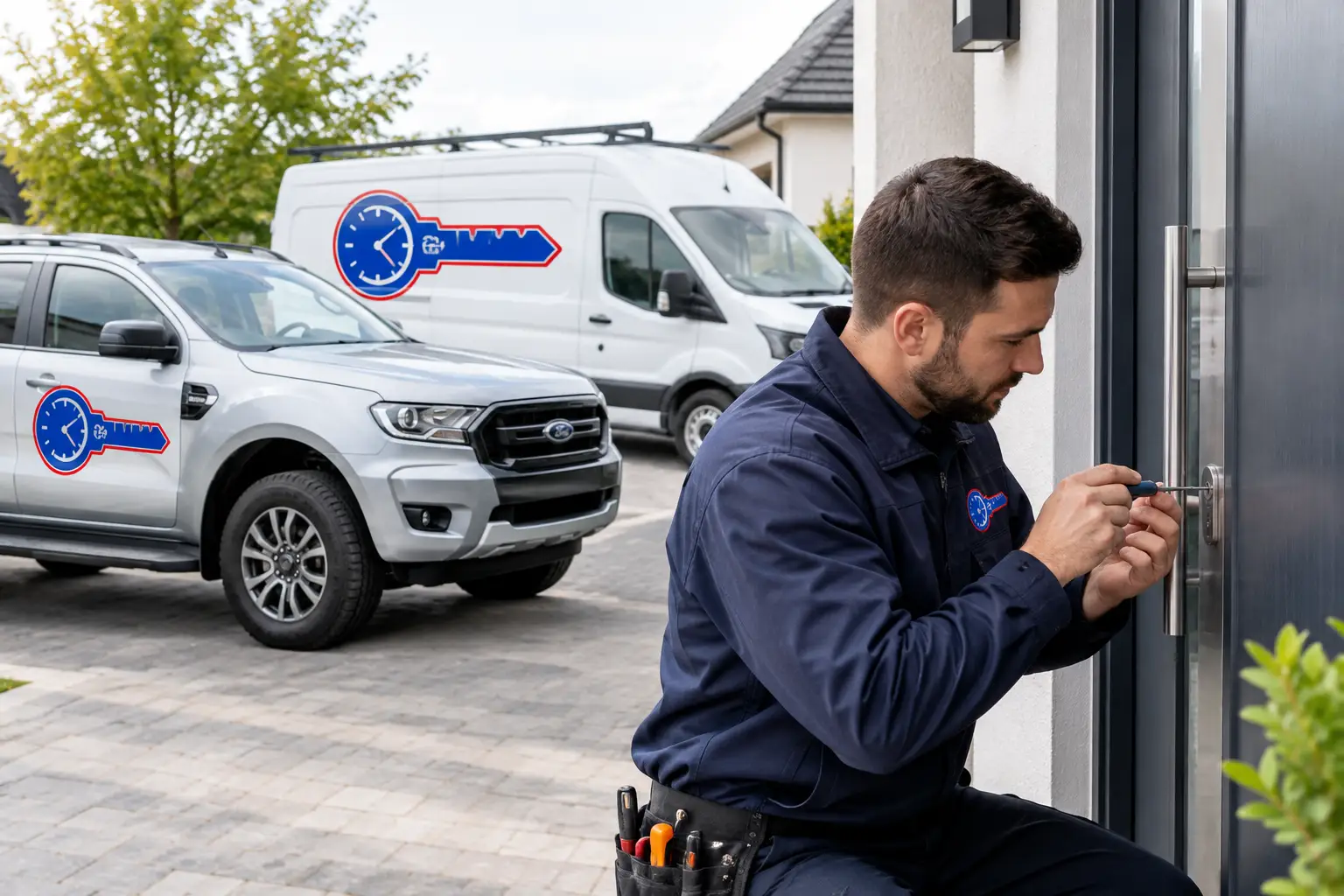
This is where experience matters. Some doors are straightforward and parts are readily available. Others have older, discontinued mechanisms that need careful identification or adaptation. A stocked locksmith van saves a lot of delay on jobs like that because there is a far better chance of resolving the issue on the first visit.
What to expect from a professional uPVC door lock repair
A competent locksmith should start with the fault, not a sales pitch. That means checking alignment, testing handle action, inspecting the cylinder, identifying the mechanism, and confirming whether the issue sits in the door, the frame or the lock itself.
From there, the repair should be matched to the problem. Sometimes that means adjusting the door and replacing nothing. Sometimes it means fitting a new cylinder. Sometimes it means opening the door, replacing a gearbox or complete mechanism, and checking operation repeatedly before leaving.
The quality of parts matters. Insurance-conscious customers should be looking for compliant hardware, especially on main entrance doors. The cheapest replacement is not always the cheapest job if it fails early or leaves security below standard.
You should also expect clear advice. If a lock can be repaired safely, say so. If the mechanism is near the end of its life, say that too. Straight answers are far more useful than false economy.
Emergency or planned repair?
Not every lock issue is an emergency, but many become one at awkward times. If the door will not lock at all, if you are shut out, or if there has been an attempted break-in, it is urgent. Securing the property comes first.
If the door is still working but getting worse, planned repair is usually the smarter route. It gives more time to diagnose the issue before a total failure, and it often avoids the extra cost and stress of an out-of-hours call-out. For landlords and property managers, acting early also helps avoid tenant lockouts and unsecured vacant periods.
For customers in Gloucestershire who need a fast, practical fix, this is exactly the sort of work Locksmiths Gloucester handles every day through https://www.locksmithsgloucester.com. The real value is not just attendance speed - it is arriving with the right parts and the experience to identify the fault properly.
How to reduce repeat lock problems
uPVC door locks usually fail through wear, poor alignment, or repeated forcing when operation gets stiff. The easiest way to extend their life is to treat early symptoms seriously. If lifting the handle starts feeling heavier, get it checked before internal parts break.
Close the door gently rather than using the handle to drag it into line. Keep hinges, keeps and seals in reasonable condition. If the key starts sticking, do not keep trying harder day after day. A small adjustment or part replacement at the right time is far cheaper than a full failure on a cold evening when the door will not open.
A good repair should leave the door operating smoothly, locking cleanly and securing properly without force. That is the standard worth expecting. If your uPVC door needs a shove, a lift, or a bit of luck every time you use it, it is already telling you something is wrong - and doors tend not to get better on their own.


Comments