

Key Holding Service: Is It Worth It?
- James Greathead

- May 2
- 6 min read
When a call comes in at 2am because an alarm has gone off, a tenant has locked themselves out, or a vacant unit needs urgent access after damage, the real problem is rarely just the lock. It is who holds the keys, who can get there quickly, and whether access can be handled without delay. That is where a key holding service earns its keep.
For landlords, business owners, schools, housing teams and homeowners with complex access needs, key holding is less about convenience and more about control. Done properly, it reduces risk, shortens response times and avoids the common mess of spare keys being left with neighbours, cleaners or staff members who may not be available when it matters.
What a key holding service actually does
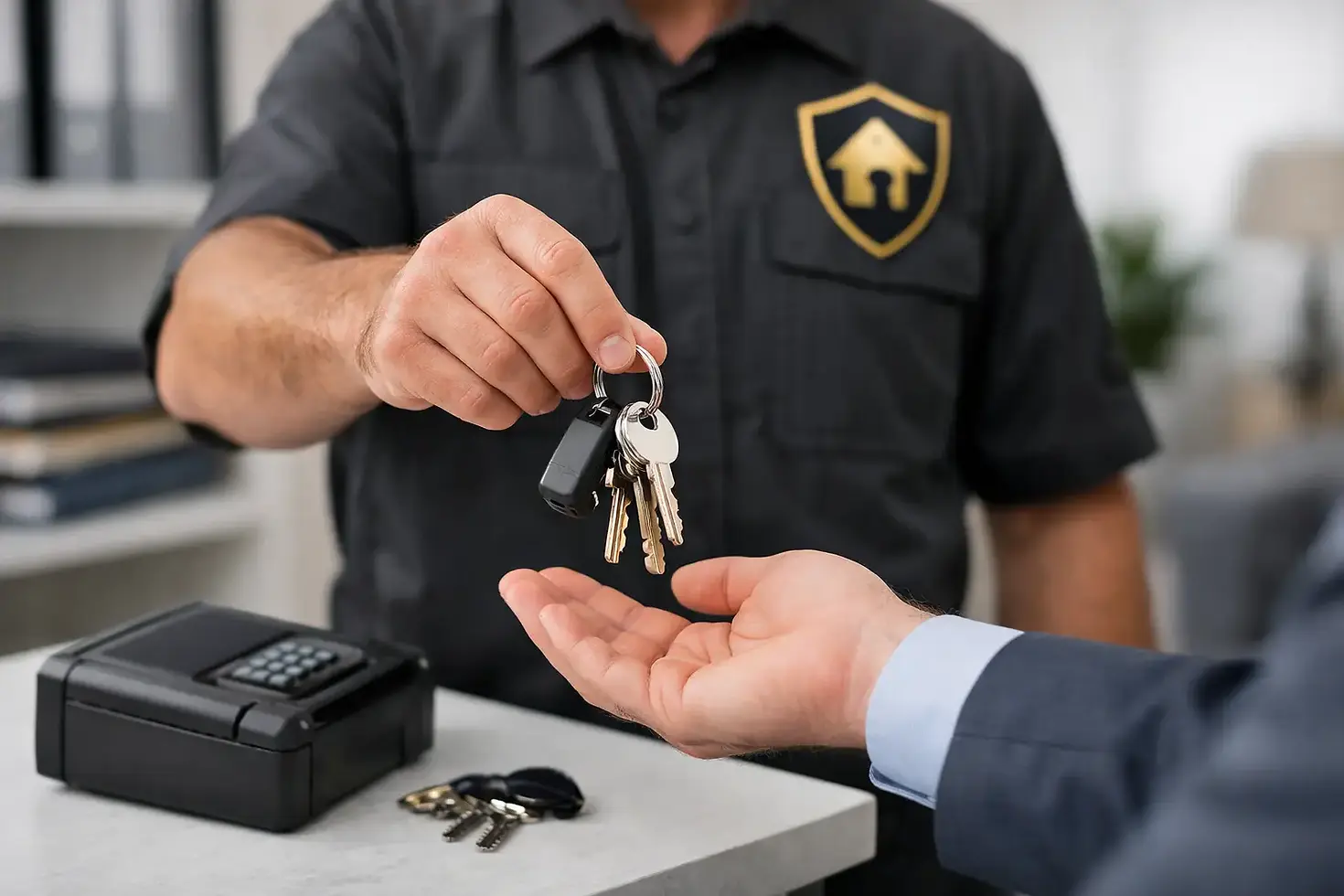
A key holding service means a trusted security professional securely stores your property keys and releases or uses them only under agreed conditions. Those conditions might include alarm activations, emergency call-outs, tenant lockouts, contractor access, welfare concerns, void property checks or urgent repairs.
In practice, it is a managed access system. Instead of relying on whoever happens to have a copy of the key that day, you have a clear process. The keys are logged, securely held and used by authorised personnel who can attend the property when needed.
That matters because emergency access is rarely tidy. A jammed mechanism, a damaged door, broken glazing or a welfare concern can all require someone to attend quickly and make sensible decisions on site. If the person arriving also understands locks, door hardware and property security, the outcome is usually better than simply handing a key to a third party and hoping for the best.
Who benefits most from a key holding service
Some properties need key holding far more than others. A single owner-occupied house with a nearby family member may not need it. A rental property with frequent tenant changeovers, out-of-hours issues and trades attending at short notice is a different story.
Landlords and managing agents often get the clearest value. Missed calls, unavailable tenants and disputed access arrangements all waste time. A proper key holding arrangement creates a record of who attended, why access was needed and what was found on site.
Small businesses also benefit, especially where there is an alarm system, multiple staff members with access, or stock and equipment on site. If the premises need checking after hours, the owner does not have to travel in the middle of the night unless it is genuinely necessary.
Public and institutional settings can gain even more. Schools, supported housing, healthcare-related sites and council-managed buildings often need secure, auditable access procedures. In those cases, a key holding service is not a luxury. It is part of risk management.
Why keeping spare keys locally is often a weak plan
Many people start with an informal setup. A spare set goes to a neighbour, a relative, a former contractor or a member of staff. That can work for a while. The problem is that informal systems tend to fail at exactly the wrong time.
Neighbours go away. Staff leave. Keys get misplaced. Nobody is fully sure which lock the key belongs to, whether another copy has been made, or whether the lock was changed after the last issue. If an alarm is sounding or a vulnerable occupant needs assistance, those gaps become serious very quickly.
There is also a security question. The more loosely keys are shared, the harder it is to know who has access. For landlords and commercial sites, that can become an insurance and liability issue as well as a practical one.
What to look for in a professional key holding service
Not all key holding arrangements are equal. The basic question is simple: if access is needed urgently, can the provider attend promptly, gain entry safely and secure the property properly afterwards?
That means storage is only one part of the job. The service is stronger when it sits within a wider locksmith and security response operation. If a lock has failed, a door has dropped, a UPVC mechanism has jammed or forced entry has left the property vulnerable, the attending professional should be able to deal with the issue there and then where possible.
Look for clear procedures around authorisation, logging and call-out response. You should also ask how keys are identified and stored, who can access them, and what happens if entry reveals a broken lock, damaged door or unsafe condition.
For higher-risk properties, it also makes sense to ask whether the provider can carry out follow-on work such as lock changes, temporary boarding up, lock upgrades or void property inspections. A key holder who can only open the door is useful. A key holder who can secure the site properly is usually better value.
Key holding service for landlords and managing agents
For rental properties, key holding solves several recurring headaches. One is out-of-hours access. Tenants lose keys, mechanisms fail and leaks or damage sometimes require immediate entry. Chasing down copies across different offices and contractors wastes time and increases stress.
Another is changeover control. When a tenancy ends, there can be uncertainty about returned keys, copied keys and old access arrangements. A managed key holding service creates a cleaner handover process and makes it easier to decide when locks should be changed rather than assumed safe.
Void properties are another area where key holding pays off. Empty homes and units are more vulnerable to break-ins, unauthorised access and unnoticed damage. If the same provider can hold keys, inspect the property and respond to urgent issues, the risk is easier to manage.
Key holding for businesses and shared premises
Commercial properties often have more moving parts than residential ones. Several people may hold keys, alarms may be monitored, and different contractors may need limited access at different times. Without a proper system, responsibility gets blurred.
A key holding service gives a single point of control. It also reduces the need for owners or senior staff to attend every alarm activation personally. That matters because many alarm call-outs turn out to be false alarms, but they still need checking.
There is a trade-off, though. Some businesses prefer to keep all access in-house because they feel it offers tighter control. That can be true if there is a reliable management team on rota, documented procedures and staff available at all hours. In smaller operations, it often means one overstretched person carrying the burden.
Security, compliance and insurance considerations
If keys are being held for a property with sensitive access needs, professionalism matters. You want a provider that treats key control as part of overall site security, not as an add-on.
That includes vetted staff, documented processes and a practical understanding of secure entry and re-securing. It also helps if the provider can fit or replace British Standard and insurance-conscious locking hardware when needed. There is little value in gaining access quickly if the property is left with a weak lock or a door that no longer closes correctly.
For organisations, the audit trail can be just as important as the emergency response. Knowing when access took place, who attended and what action was taken protects everyone involved.
When a key holding service may not be necessary
It is not the right fit for every property. If you live on site, have dependable nearby family support and rarely need third-party access, a formal arrangement may be more than you need.
The same applies to very low-risk sites with limited occupancy and no alarm response requirement. In those cases, a secure key safe or a small, tightly managed internal key process may be enough.
The point is to match the service to the risk. If delayed access could lead to lost rent, security issues, avoidable damage or a long overnight wait, key holding starts to make more sense.
The real value is in the response, not just the key storage
This is where many people misjudge the service. They compare the cost of professional key holding with the idea of simply leaving a spare key somewhere convenient. On paper, the spare key looks cheaper.
But the cost of poor access control adds up quickly. Missed contractor visits, delayed emergency entry, failed alarm responses, insecure voids and unnecessary lock damage are all more expensive than they first appear. A proper service reduces those problems because it combines access with accountability and practical action on site.
For that reason, the best key holding service is usually one backed by a local locksmith and property security team rather than a remote admin setup. If the key holder can also deal with failed locks, damaged doors, boarding up and post-incident security, you avoid the hand-off that often causes delay.
Locksmiths Gloucester sees this first-hand across residential, rental and managed properties. The issue is rarely just who has a key. It is whether the person attending can solve the security problem properly once the door is open.
If you are weighing up whether key holding is worth it, ask yourself one simple question: if access is needed urgently tonight, do you already know exactly who is going, how they will get in, and how the property will be secured afterwards? If the answer is not a confident yes, a professional setup is probably worth having.


Comments