

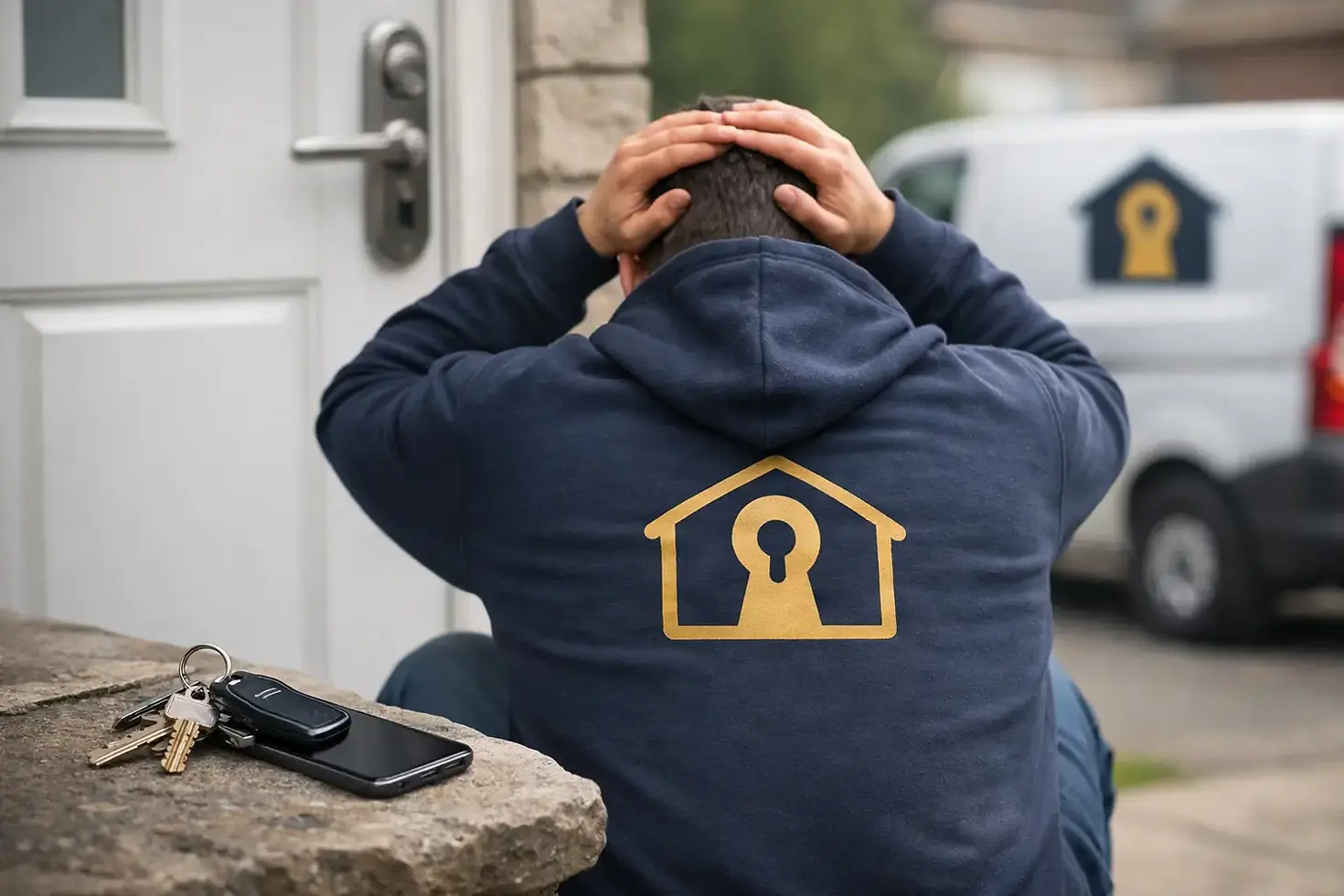
Locked Out? What to Do Before Help Arrives
- James Greathead

- 18 hours ago
- 5 min read
Being locked out is rarely convenient. It often happens when you are leaving for work, collecting children, returning late, or trying to secure a rental property between tenants. The priority is simple: get back in safely, avoid damage and make sure the property remains secure.
A calm, practical approach can save time and prevent an expensive repair. Here is what to do when you cannot get into your home, flat, business premises or managed property.
First, check whether there is a safe way in
Before calling for help, take a minute to check the obvious. Is another external door open? Has someone in the household retained a spare key? Is there a properly installed key safe that an authorised person can access? For a business, can a manager, key holder or facilities contact attend promptly?
Only use an alternative entrance if it is genuinely safe and you have permission to do so. Do not force a window, climb onto roofs, remove panels or attempt to prise a door open. Aside from the risk of injury, these attempts can damage frames, glazing, handles and multipoint locking mechanisms. A straightforward lockout can quickly turn into a costly door repair.
If you live in a block of flats, avoid letting an unknown person follow you through a communal entrance. It may be frustrating to wait outside, but shared security exists to protect every resident.
If you are locked out, keep the property secure
Stand where you can see the main entrance and keep an eye on the property while arranging help. If it is dark, wet or unsafe to wait outside, move to a nearby well-lit place and stay within sight where possible. Let the locksmith know your exact location, the type of property and any access issues such as a gated entrance or shared driveway.
For commercial premises, avoid leaving stock, equipment or confidential areas exposed. If a door has been damaged during an attempted entry or after a break-in, the immediate need may be emergency boarding up rather than simply gaining entry. A professional locksmith can assess the opening, secure it and advise on the most suitable permanent repair.
Landlords and property managers should also consider who is authorised to approve work. Having a clear contact number, property details and access procedure makes an urgent call-out much quicker, particularly outside normal office hours.
Do not force the lock or handle
A stiff handle, key that will not turn or door that appears locked from the inside is not always a simple lost-key problem. On UPVC and composite doors, the issue may be a failed gearbox, worn cylinder, damaged mechanism or door alignment fault. Applying more force can snap a key, break the handle or cause additional damage inside the door.
This is especially common when a multipoint lock has not been lifting smoothly for some time. The door may still close, but the locking points are no longer lining up correctly. Eventually, the mechanism can fail in the locked position.
A locksmith with UPVC door experience will diagnose whether the issue is the cylinder, handle, keeps, hinges or internal mechanism. In many cases, the repair can be completed on the first visit when the locksmith arrives with suitable stock and replacement parts.
Give clear details when you call
The more useful information you provide at the start, the better prepared the locksmith can be. Explain whether you are outside with no key, whether a key is stuck or broken in the lock, or whether the handle and door mechanism have failed. Mention the door material if you know it - timber, UPVC, composite, aluminium or a commercial shutter - and tell them if the property is occupied, vacant or vulnerable.
It also helps to describe any immediate concern. Perhaps a child is inside, an elderly resident needs access, a tenant cannot secure the property, or a business needs to open for staff and customers. These details help the locksmith understand the urgency and bring the most appropriate equipment.
A reputable local locksmith should explain the likely process clearly. That includes confirming attendance arrangements, identifying the property on arrival and discussing any necessary work before proceeding. If replacement parts are needed, you should understand what is being fitted and why.
Expect proof of authority to enter
A professional locksmith must be satisfied that you are entitled to enter the property. That protects homeowners, tenants, landlords and businesses from unauthorised access. You may be asked for identification, tenancy details, a utility bill, confirmation from a landlord or another reasonable form of evidence.
Do not worry if your identification is inside. In that situation, a locksmith can often verify your authority after entry, provided there is a sensible way to do so. For managed properties, a call from the landlord, agent or named key holder may be required.
This process is a good sign. Fast response should never mean cutting corners on property security.
Non-destructive entry is usually the right first option
Where the lock and door allow it, a skilled locksmith will normally aim for non-destructive entry. This means gaining access without unnecessary damage to the door, frame or hardware. It is often the quickest and most cost-effective route, but it depends on the lock type, the fault and the security features fitted.
Some situations require the lock cylinder or another component to be replaced. For example, a snapped cylinder, a failed mechanism or damage following an attempted break-in may make replacement the safest option. In these cases, the focus should be on restoring security properly rather than applying a temporary fix that leaves the property at risk.
For external doors, ask about British Standard and anti-snap lock options where appropriate. Insurance requirements vary, but quality security hardware can reduce the risk of cylinder snapping and provide greater reassurance after a lockout or repair.
Check the door before the locksmith leaves
Once access has been gained, test the door with the locksmith present. The key should operate smoothly, the handle should lift and return correctly where applicable, and the door should lock without needing to push, pull or force it into position.
This matters particularly with UPVC doors. Replacing a cylinder alone may not solve an underlying alignment or gearbox problem. If the handle is still stiff, the door catches, or the lock feels unreliable, ask for the cause to be checked before the job is signed off.
If new parts have been fitted, keep the paperwork and any warranty information in a safe place. For landlords and businesses, record the work completed, the lock type and who now holds authorised access. It is a small administrative step that prevents confusion later.
Prevent the next lockout without weakening security
Spare access should be planned, not improvised. Leaving a key under a plant pot, loose brick or outdoor mat is not a security solution. It is one of the first places an opportunist will look.
A properly fitted key safe can work well for households supporting relatives, landlords managing tenancies and organisations with approved out-of-hours access arrangements. The right option depends on who needs entry, how frequently access is required and the level of security needed. In some properties, a restricted key system or managed key holding arrangement provides better control.
It is also worth acting on early warning signs. A key that catches, a loose handle, draughts around a UPVC door or a window that will not lock cleanly can all point to a developing problem. Booking a repair before the mechanism fails can avoid being locked out at the worst possible time.
For urgent lockouts and property security issues across Gloucestershire, Locksmiths Gloucester provides a 24-hour response with practical advice, specialist door repairs and security-conscious replacement options. If the door is becoming difficult to operate, deal with it now while you still have safe access - it is usually easier, quicker and less stressful than waiting for it to fail completely.


Comments