

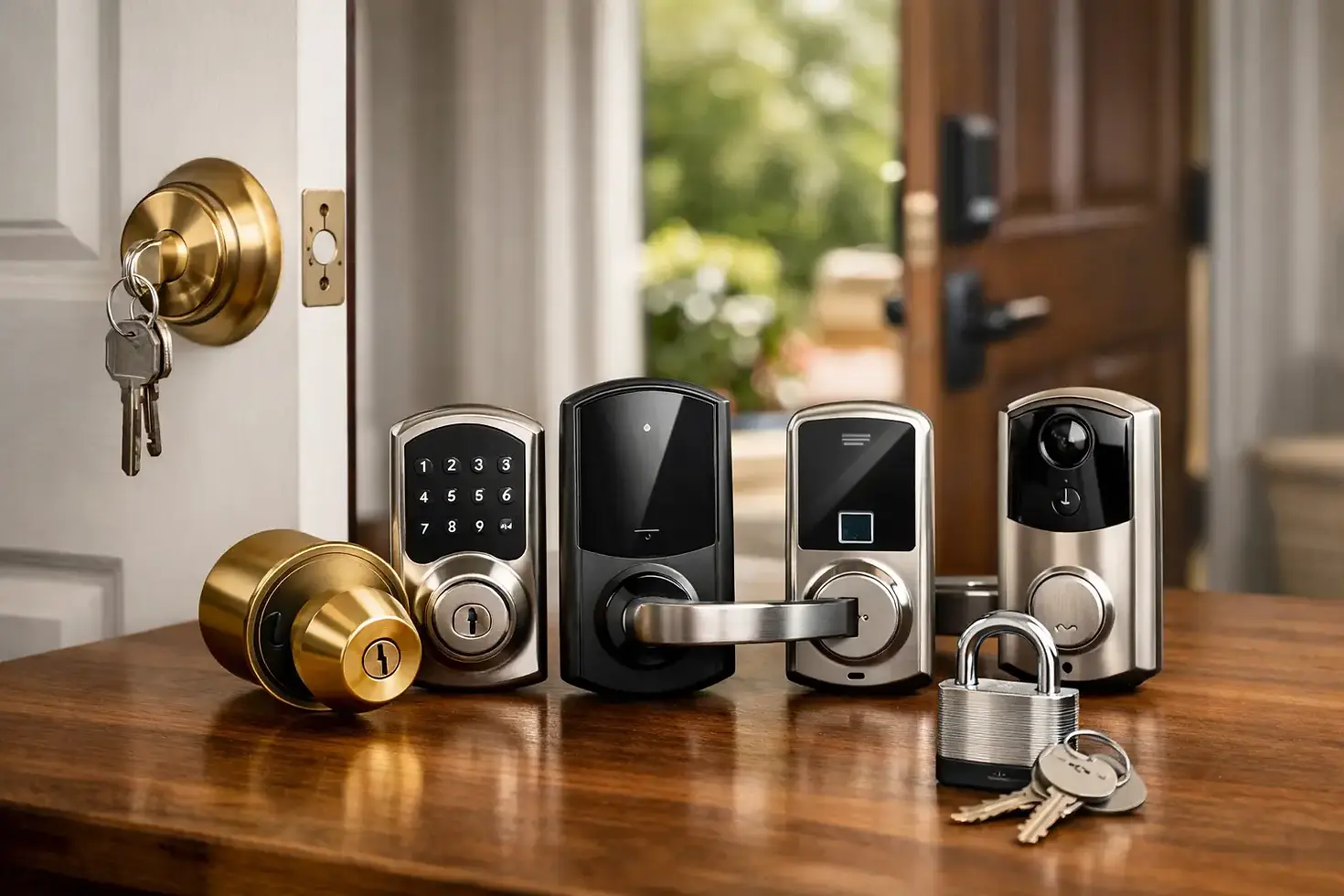
7 Best Locks for Front Doors

A front door usually gets attention only when something goes wrong - a key won’t turn, the handle drops, the latch sticks, or the lock simply doesn’t feel secure anymore. That is why choosing the best locks for front doors is not just about buying the strongest product on the shelf. It is about matching the lock to the door, the frame, the way the property is used, and the level of protection you actually need.
For some homes, the right answer is a straightforward British Standard night latch with a proper deadlock backup. For others, especially those with composite or UPVC doors, the real weak point is not the handle or the key itself but the euro cylinder inside the multi-point locking system. If that cylinder is poor quality, the whole door can be left exposed even if the rest of the mechanism looks solid.
What makes the best locks for front doors?
The best lock is not always the most expensive one. In practice, a good front door lock does four jobs well. It resists forced entry, works reliably day after day, suits the construction of the door, and meets any insurance requirements that apply to the property.
That last point gets missed quite often. Many household insurers expect certain external doors to have British Standard compliant locks. If a lock has failed, been replaced badly, or was never suitable in the first place, it can create problems later. That is one reason professional fitting matters just as much as the hardware itself.
Material matters too. A timber front door and a UPVC front door need very different solutions. Timber doors often use separate locks such as mortice sashlocks and night latches. UPVC and composite doors usually rely on multi-point mechanisms, where the cylinder becomes the part that most often needs upgrading.
1. Anti-snap euro cylinder locks
If your front door has a euro profile cylinder, this is often the first place to improve security. Standard cylinders can be vulnerable to snapping, drilling and picking. Anti-snap cylinders are designed to break in a controlled way or resist attack altogether, making forced entry far harder.
This matters most on UPVC and composite doors, where the multi-point strip may look secure but still depends on the cylinder at the centre. A poor cylinder can let the whole system down. A good anti-snap cylinder, ideally one that meets TS007 or Sold Secure standards, is one of the most worthwhile upgrades for many homes.
That said, not every cylinder marked as high security performs equally well. Correct sizing is critical. If the cylinder projects too far from the handle, it gives an intruder more to grip. A properly measured and properly fitted cylinder is far safer than a premium one installed badly.
2. BS3621 mortice deadlocks
For solid timber front doors, a BS3621 mortice deadlock remains one of the best choices. It is fitted into the body of the door and throws a strong bolt deep into the frame. When installed well, it offers very good resistance against forced entry.
This type of lock is often recommended for final exit doors because it is recognised by insurers and has a clear standard behind it. You will usually operate it with a key from both sides, so it is secure, but that does mean it is less convenient for some households than a latch-based option.
There is a trade-off here. A deadlock is strong, but on its own it does not give the quick shut-and-latch convenience people often want for daily use. That is why many timber doors use a deadlock together with a night latch rather than relying on just one lock.
3. Mortice sashlocks
A mortice sashlock combines a latch and a deadbolt in one case. It is common on timber doors where you want security and everyday practicality together. Lift the handle, close the door, and the latch holds it shut. Turn the key, and the deadbolt adds proper security.
For many households, this is a sensible all-round setup. It feels familiar, it suits traditional timber doors, and if you choose a British Standard version, it can also help with insurance compliance.
The main thing to watch is door condition. Even the best sashlock will struggle if the door is warped, the keeps are loose, or the frame has movement in it. Locks work as a system with the door and frame, not as stand-alone pieces of metal.
4. British Standard night latches
Night latches still have a place, especially on timber front doors. A good British Standard night latch can provide fast, convenient locking when you leave or arrive, and many include deadlocking features for extra protection.
They are especially useful where people want the door to lock automatically behind them. That can be helpful in shared houses, rented properties or busy family homes. On the other hand, that same convenience can become a nuisance if residents regularly step outside without checking they have their keys.
A night latch is rarely the best single line of defence on its own. It works best when paired with a proper mortice deadlock or sashlock. Used in combination, the door is harder to force and more practical to use day to day.
5. Multi-point locking systems
Most modern UPVC and composite front doors use multi-point locking. Instead of one bolt, the mechanism secures the door at several points along the frame. When functioning properly, this gives strong compression, better weather sealing and improved resistance to being forced open.
The important thing to understand is that the visible handle is only part of the story. Inside the door is a gearbox and strip mechanism that can wear out, go out of alignment, or fail altogether. If the door becomes stiff to lift, hard to lock, or starts catching, those are warning signs worth dealing with early.
In many cases, the best upgrade is not replacing the whole door but fitting a better cylinder and correcting any alignment or mechanism issues. That is often faster, more affordable and far more effective than guessing and swapping parts at random.
6. Smart locks for front doors
Smart locks can suit some properties very well, but they are not automatically the best choice for everyone. They offer convenience, temporary access control and, in some setups, a useful record of entry. For landlords, managed lets and certain business premises, that can be a real advantage.
For a standard family home, the decision depends on priorities. If convenience comes first, a quality smart lock can be useful. If maximum physical security and simple reliability are the main concern, many people still prefer a traditional mechanical lock setup with approved hardware.
You also need to think about compatibility. Not every smart product is suitable for every door type, especially older timber doors or doors with existing multi-point mechanisms. The lock still needs to meet security standards in the real world, not just offer extra features on paper.
7. Rim automatic deadlatches
A rim automatic deadlatch is similar in appearance to a night latch but includes features that make it harder to slip back with a card or similar method. This makes it a better option than a basic latch where that type of attack is a concern.
They are often chosen for flats, side entrances and certain residential doors where automatic locking is useful. As with standard night latches, they are strongest when used with a second secure lock rather than on their own.
The quality of fitting is again crucial. A badly fixed keep or weak frame can undermine the benefit of the lock itself.
How to choose the right lock for your door
The quickest way to narrow down the choice is to start with the door material. If you have a timber front door, you are usually looking at mortice locks, sashlocks, deadlocks and night latches. If you have a UPVC or composite door, the key question is often the condition of the multi-point mechanism and the quality of the cylinder.
Then consider how the property is used. A family home may need a balance between convenience and security. A rented property may benefit from simple, durable hardware that stands up to heavy use. A vacant property or building with higher risk may need additional reinforcement and stricter key control.
Insurance should also be part of the decision. If you are not sure what your policy expects, it is worth checking before replacing anything. Fitting a lock that looks secure but does not meet the right standard can be a false economy.
When the lock is not the real problem
People often assume the lock itself has failed when the underlying issue is the door alignment, worn handles, a failing gearbox or movement in the frame. That is especially common with UPVC and composite doors. The key starts feeling stiff, the door needs lifting, or the lock works one day and jams the next.
In those cases, replacing the cylinder alone will not solve much. The whole door setup needs checking properly. That practical approach is what prevents repeat call-outs and the expense of replacing parts that were never the problem.
A local specialist with stocked vans and experience in front door mechanisms can usually sort this far more efficiently than a general handyman or a remote call-centre outfit sending whoever is available.
Best locks for front doors - the sensible choice
If you want the simplest rule of thumb, it is this: fit a lock that suits the door, meets a recognised standard, and is installed properly. For timber doors, that often means a BS3621 mortice deadlock or sashlock, sometimes paired with a British Standard night latch. For UPVC and composite doors, an anti-snap euro cylinder is often the most effective upgrade, provided the mechanism and alignment are also in good order.
There is no single best lock for every front door. There is only the right lock for your door, your property and your day-to-day use. If your lock is worn, stiff, damaged or simply outdated, sorting it before it fails completely is usually the cheaper and safer option. A secure front door should feel solid, work smoothly and leave you with one less thing to worry about when you shut it behind you.


Comments