

How to Secure a Damaged Door Fast

A damaged door stops being a nuisance the moment it affects how it closes, locks or lines up with the frame. If you are dealing with a forced door, split frame, failed lock or broken UPVC mechanism, knowing how to secure damaged door problems quickly can make the difference between a manageable repair and a serious security risk.
The first priority is simple - make the property safe enough for the next few hours. The second is working out whether the problem sits in the lock, the frame, the hinges, the handle set or the door itself. Get that part wrong and you can waste time adding a new lock to a door that still will not shut properly.
How to secure damaged door problems safely
Start by checking whether the door can still close fully into the frame. If it will not close at all, do not rely on the lock alone. A latch that only partly engages is not real security, even if the key turns. In that situation, keep the door shut as tightly as possible, limit use of that entrance and arrange a proper repair urgently.
If the door does close, test the lock gently. Do not force the key or handle. On timber, composite and UPVC doors alike, extra pressure can turn a repairable fault into a broken gearbox, snapped handle spindle or distorted keep.
For a short-term measure, you can reinforce the weak point rather than just the lock. If the frame is split, the frame needs attention. If the hinges are pulling away, the hinge side needs attention. If the panel is cracked or the glazing area has been compromised, that is a different level of risk and often needs emergency boarding or a full door repair.
A lot depends on the type of damage. A door after attempted entry behaves very differently from a door that has dropped over time or one with a failed multipoint mechanism.
What kind of damage are you dealing with?
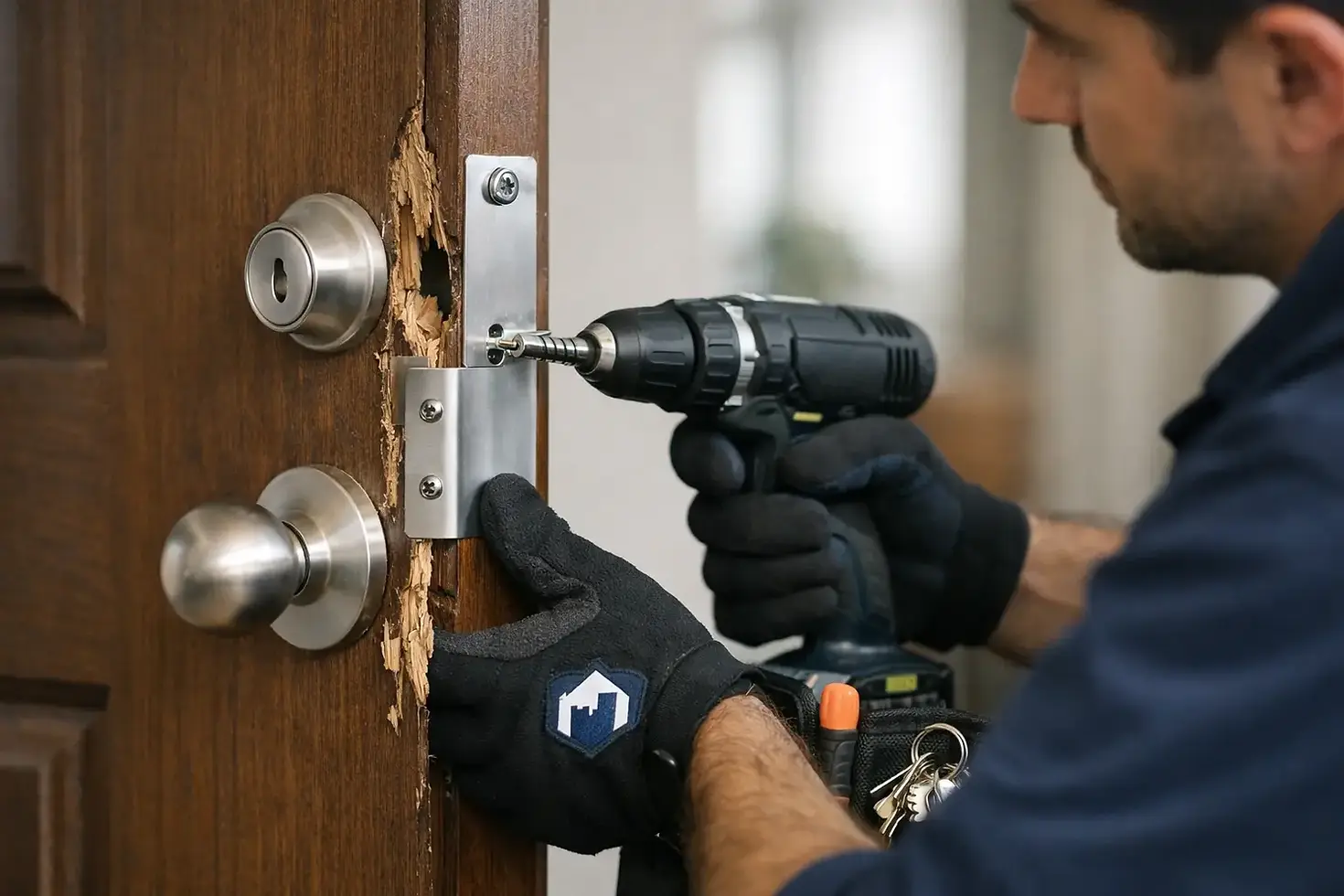
A loose handle or stiff lock is inconvenient, but a door that has been kicked, forced or twisted needs treating as a security issue straight away. Look closely at the frame around the latch and deadlocking points. Splitting timber, bent strike plates, pulled screws and visible gaps between the door and frame usually mean the structure has taken the impact, not just the lock.
With UPVC and composite doors, the fault is often less obvious. The cylinder may look intact while the internal gearbox or strip mechanism has failed. In those cases, the key may spin, the handle may drop without retracting properly, or the door may only lock when lifted in a certain position. That is not something to ignore overnight.
Hinge damage matters as much as lock damage. If the door has dropped, the locking points may no longer line up. People often assume they need a new cylinder when the real issue is alignment. A proper fix might be adjustment, hinge work, mechanism replacement or frame repair, depending on wear and the extent of the damage.
Temporary ways to secure a damaged door
If you need to hold things safely until a locksmith arrives, keep the solution simple and realistic. Your aim is delay and stability, not a perfect finish.
For an inward-opening door that still closes, a solid brace on the inside can help prevent the leaf being pushed open. That only works while the property is occupied, and it must not create a fire safety issue by trapping people inside. For an outward-opening door, the focus is usually on keeping the lock side tight to the frame and reducing movement at any split sections.
If fixing screws in the keeps, hinges or handle backplates have loosened but the surrounding material is sound, tightening or replacing them with the correct length can improve security for the short term. If the screw holes are stripped or the frame is cracked, longer screws alone are not a proper answer. They may bite temporarily, but they will not restore strength to damaged material.
Broken glazing near the lock side is a more urgent matter. Once glass or a glazed panel has been compromised, the lock may be reachable or the whole panel may become unstable. That usually calls for boarding or immediate repair rather than improvised patching.
When a lock change is enough - and when it is not
People often ask whether replacing the lock will sort it. Sometimes yes, often no.
A snapped or compromised euro cylinder should be replaced quickly, ideally with an anti-snap, British Standard approved cylinder that suits the door and meets insurer expectations. If the attack was limited to the cylinder and the door and frame are still sound, that may be the main repair.
But where the frame is split, the keeps are torn out, the door edge is crushed or the multipoint strip is damaged, changing the cylinder alone leaves the weak point untouched. The same applies when the handle has failed because the internal mechanism has jammed. Fitting a new handle to a failing gearbox is usually money spent twice.
This is where experienced diagnosis matters. A stocked locksmith van is useful because the repair may need a new cylinder, replacement handles, keeps, a gearbox, hinge adjustment and frame reinforcement in one visit. That is often the difference between a proper first-time fix and another insecure night.
How to secure damaged door frames
The frame is what the lock actually holds against. If the frame is split or loose in the opening, even a high-quality lock can only do so much.
Minor frame damage may be repairable with reinforcement and replacement hardware. On timber frames, that can include refixing keeps securely into sound material and addressing any splitting around the lock area. On UPVC frames, the job is more about restoring alignment and making sure the locking points engage properly across the full length of the mechanism.
If the frame has moved due to force, wear or poor fitting, the door may need realignment before any lock work is completed. Otherwise, the new parts are being installed into a door that still binds, drops or mislocks. That tends to shorten the life of the repair.
Where damage is severe, temporary securing followed by replacement is often the honest answer. There is no benefit pretending a badly broken frame can be made good with a quick cosmetic fix.
Repair or replace?
Not every damaged door needs replacing. If the slab is sound, the frame is stable and the problem is mainly the lock, keeps, handles, hinges or alignment, repair is usually faster and more cost-effective.
Replacement becomes more likely when the door leaf is cracked, warped or structurally weakened, when glazing or panel sections are badly compromised, or when repeated failed repairs have left multiple faults. Rental properties, commercial units and public-facing buildings may also need a more formal repair standard for safety and insurance reasons.
The right decision comes down to security, reliability and cost over time. A cheaper patch that fails again in a month is not really cheaper.
Why damaged UPVC doors need specialist attention
UPVC doors catch people out because the problem often feels like a simple lock fault. In reality, these doors depend on alignment across the full multipoint system. If the hinges are off, the sash has dropped, the keeps are worn or the gearbox is failing, the symptoms overlap.
That is why forcing the handle or lifting the door harder is a bad habit. It may get the door shut for the night, but it also puts more strain on the internals. A specialist locksmith will usually check the whole chain - cylinder, handles, spindle, gearbox, strips, keeps and hinge position - before deciding what needs replacing.
For homes, flats, rental stock and small business premises, that approach saves repeat visits. It also gets the door back to locking smoothly, which matters because a secure door still needs to be usable every day.
When to call for urgent help
If the door will not lock, will not close, has visible forced damage, has exposed glazing damage near the lock, or leaves the property insecure when you leave, it is time for urgent attendance. The same goes for vacant properties, shared entrances and commercial buildings where one weak door affects wider security.
A local emergency locksmith can usually make the property secure first, then complete the full repair if parts or additional works are needed. In Gloucestershire, Locksmiths Gloucester often deals with exactly these situations - failed UPVC mechanisms, damaged frames, lock replacements and emergency boarding after forced entry.
If you are waiting for help, keep the affected entrance out of use where possible, use an alternative access point if you have one, and avoid forcing any stiff lock or handle further.
A damaged door does not need guesswork. The safest approach is to stabilise it, avoid making the fault worse, and get the right repair done before a temporary problem turns into an open invitation.


Comments